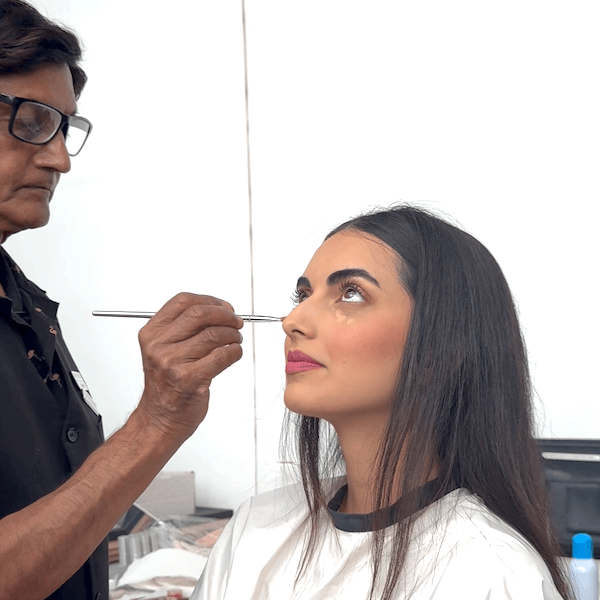
How-to · Technique · 4 min read
The long-day base: building coverage that lasts a shoot, a wedding or a stage
Longevity is decided before the foundation goes on. A professional sequence for bases that survive twelve-hour days, hot lights and close cameras without looking heavy.
11 February 2026 · SUPERCOVER Artistry & Education
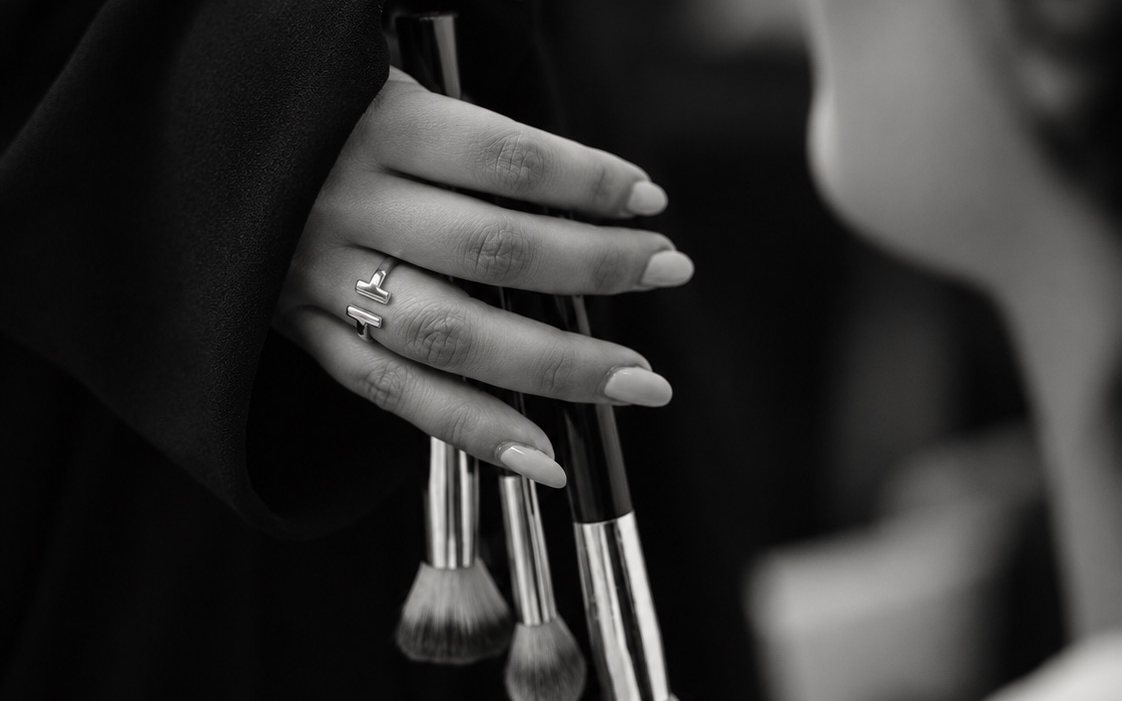
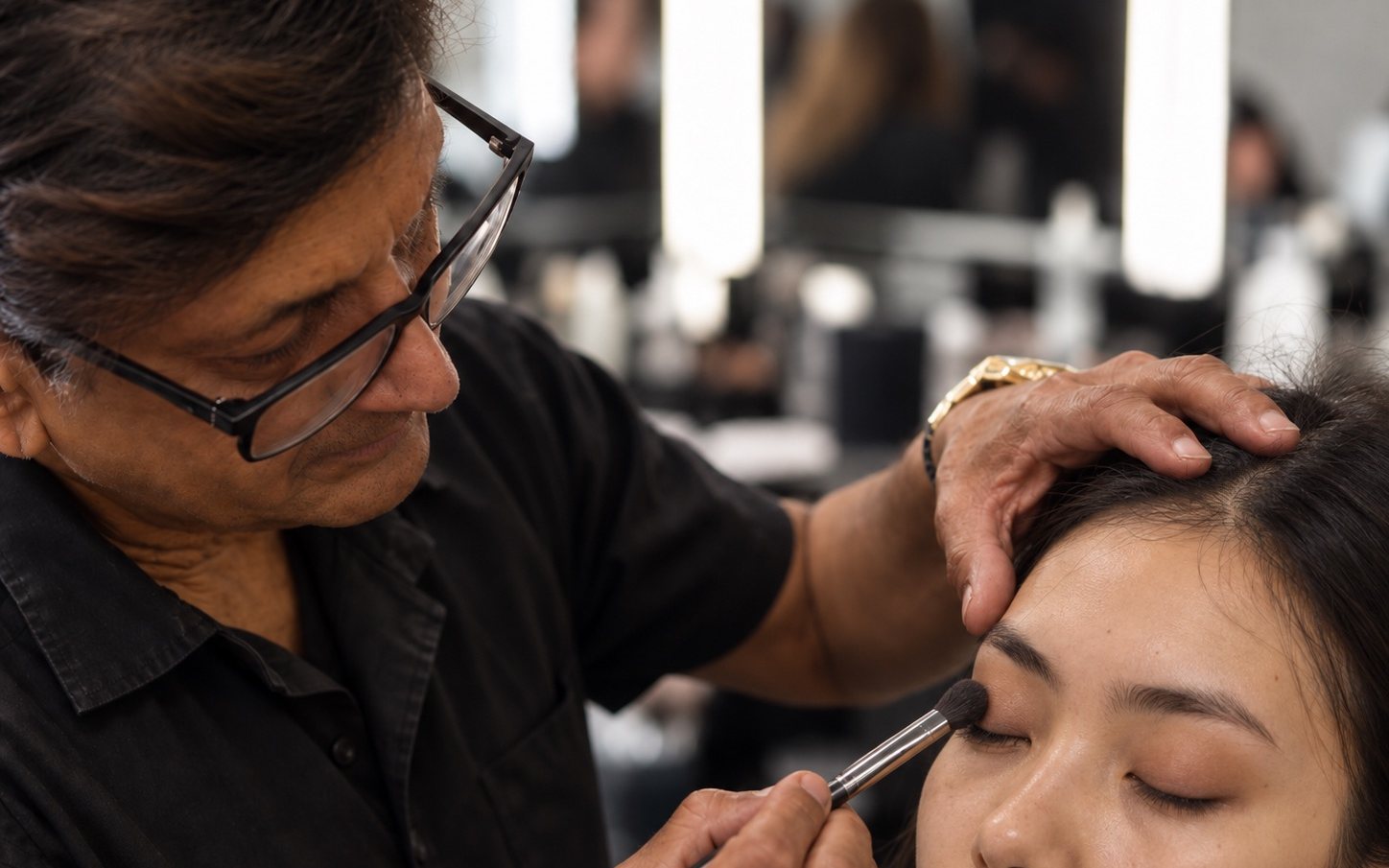
A base that looks beautiful at nine in the morning proves very little. The real test comes at six in the evening, after heat, talking, eating, tears, a hug from every relative or a day under studio lighting. Whether you work in bridal, events, editorial or on set, long wear is rarely about finding a stronger product. It is about sequence, quantity and a handful of decisions made before the foundation ever comes out of the kit.
Why bases break down
When a base fails over a long day it usually fails in one of four ways: it slides where the skin moves most, it separates over oily areas, it creases into lines, or it looks flatter and heavier as the day goes on. Almost all of these come back to the same few causes. Too much product. Skin that was not ready to receive it. Layers that were never given time to settle. Or powder applied as an afterthought rather than as part of the structure.
- Sliding and separating: usually too much product, or skincare that had not absorbed before foundation went on.
- Creasing: product built up in areas of movement such as under the eyes and around the mouth.
- Looking heavier by the evening: layers added through the day to fix problems a thinner first application would have avoided.
The sequence
- 01
Prep, then wait
Start with clean, comfortable skin and whatever skincare suits it. Then give it time to absorb. Foundation applied over skincare that is still sitting on the surface is the single most common reason a base slides. A cream foundation needs an even, settled surface to grip.
- 02
Prime where it matters
Use primer as a tool, not a ritual. Press it into the areas that need grip or smoothing, often the centre of the face and any open texture, rather than coating the whole face by default.
- 03
Correct locally
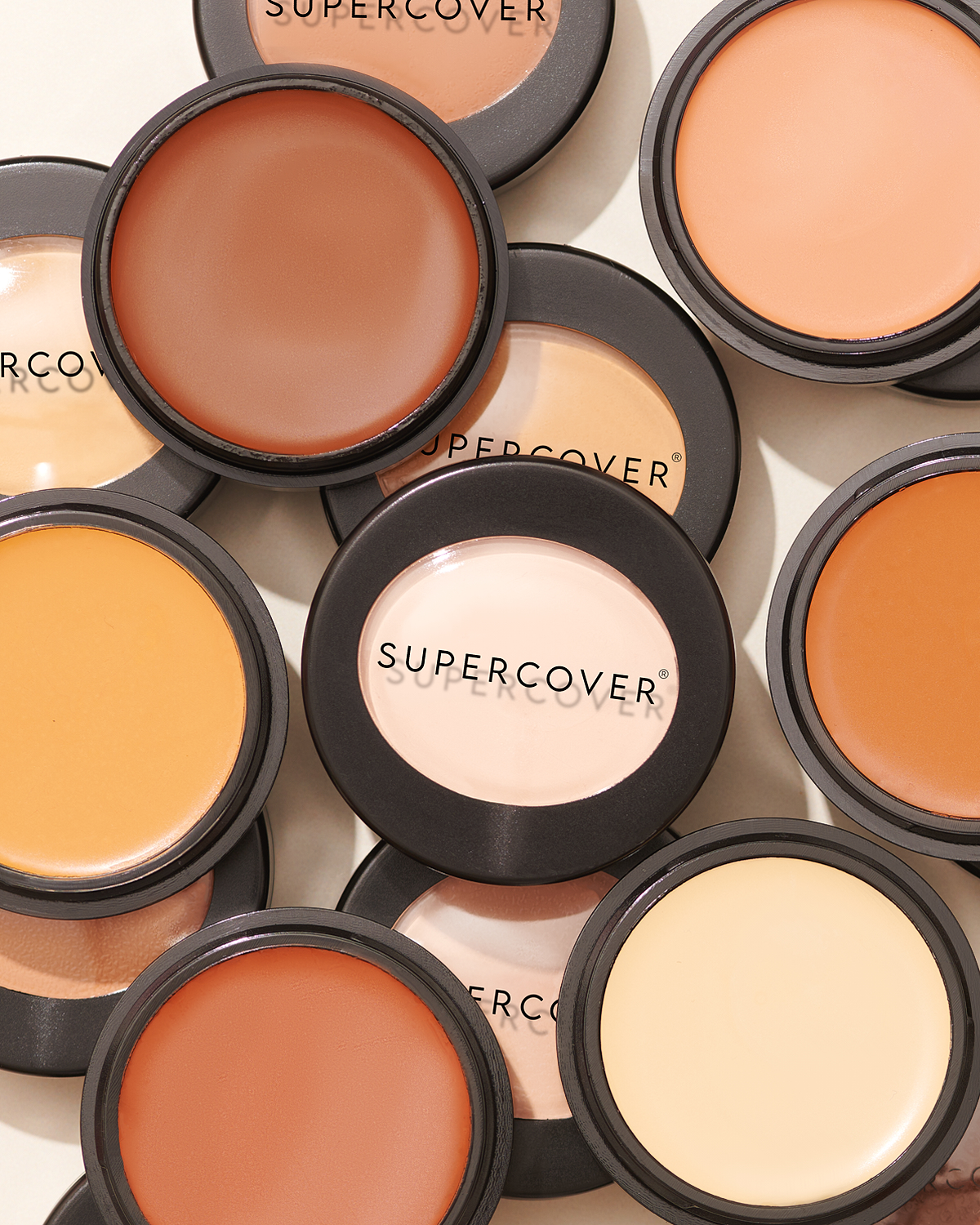
Balance only the two or three areas that need it with a small amount of corrector, edges softened. Every place you correct instead of covering is a place where the foundation can stay thin.
- 04
Press the foundation in thin
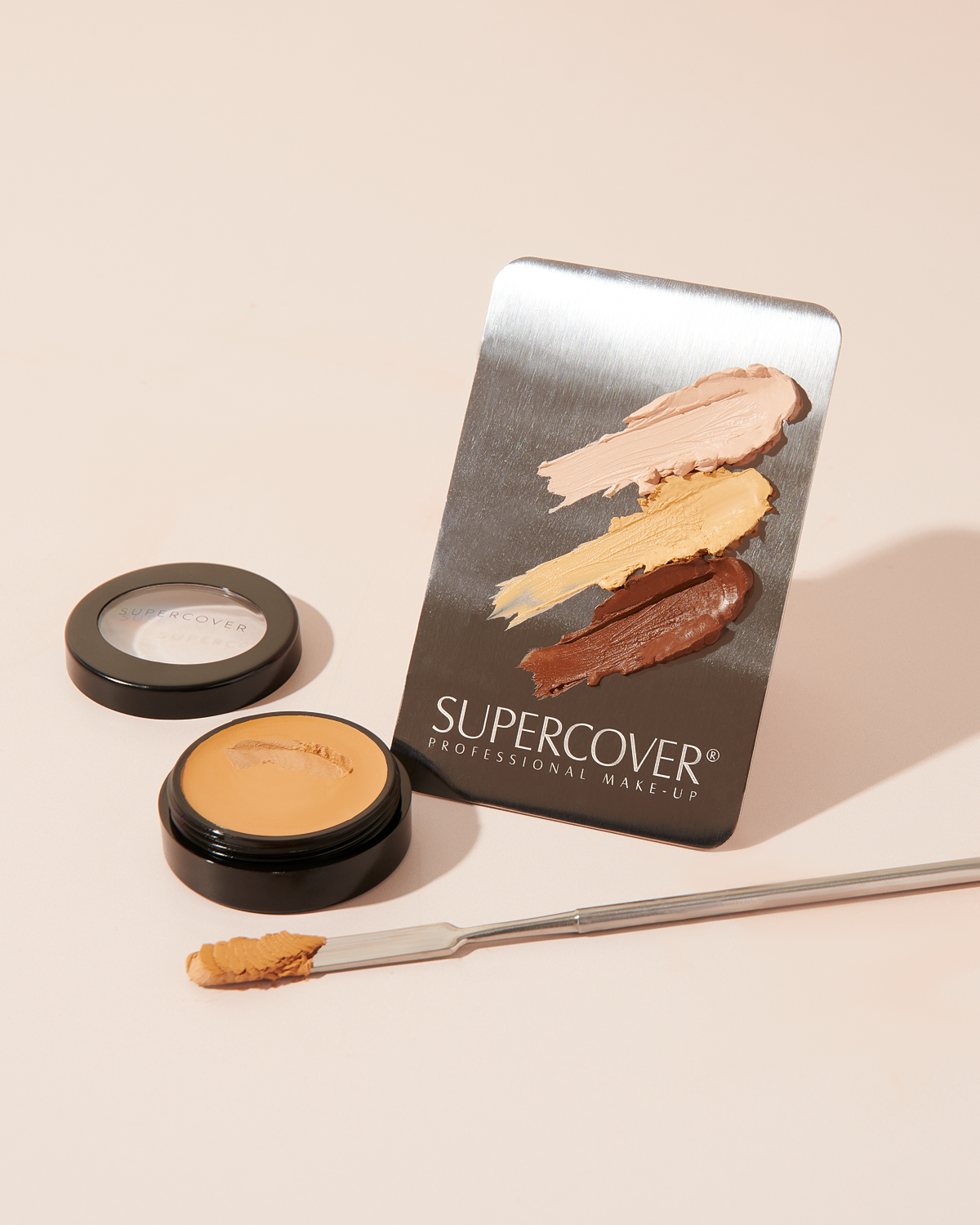
Lift a small amount of cream with a spatula, warm it, and press it in with a dampened sponge or brush. Work from the centre out. Build a second thin layer only where coverage is genuinely needed. Thin layers hold; thick layers move.
- 05
Let it settle before you set
Give the base a few minutes. Cream foundation finishes bonding with the skin as it warms. Setting too early traps movement underneath the powder; setting after it has settled locks it in place.
- 06
Set with intent
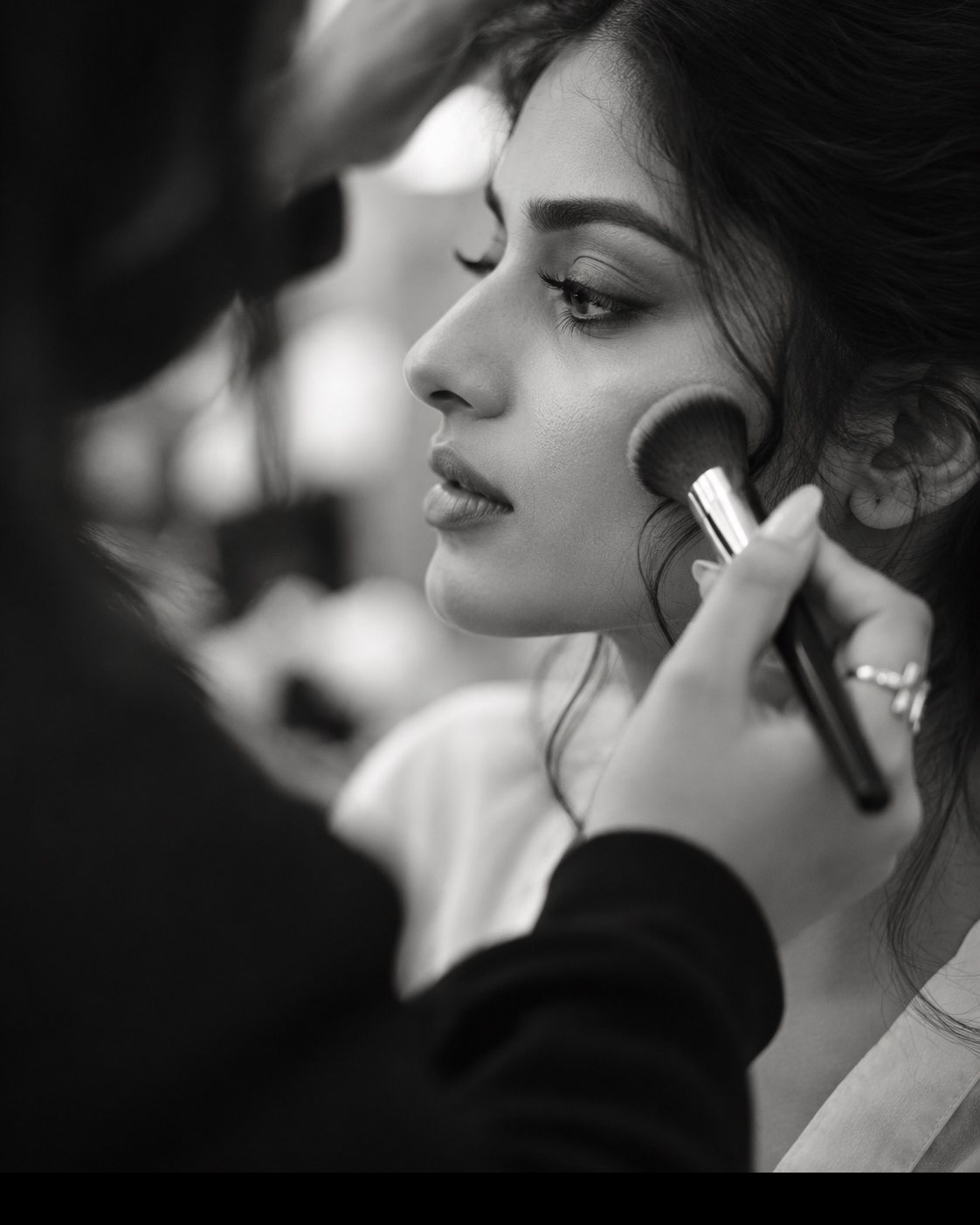
Press a fine powder in with a puff where the face moves and where it gets oily first, usually around the nose, under the eyes and the centre of the forehead. Lightly dust the rest. Pressing sets; sweeping moves the base around.
- 07
Bring it back to skin
Finish with a fine mist to take away any powdery surface. The aim is a base that looks like skin at arm's length and on camera, not one that looks set.
Adjusting for the job
Bridal work asks for comfort as much as endurance: the client will wear the base for twelve hours, be photographed at close range and hugged repeatedly. Keep the application thinner than you think, press powder firmly into the T-zone and under the eyes, and leave a small touch-up kit with a trusted person rather than relying on the bride to reapply.
Studio and on-set work adds heat and continuity. The base has to match itself across hours or days, so note which shades and quantities you used, set more thoroughly around the hairline and top lip where heat shows first, and plan blotting rather than powdering for touch-ups so the base does not thicken shot by shot.
Live events and stage combine the two: distance means you can build a little more coverage, but movement and heat mean everything you add has to be set properly. Here more than anywhere, powder is part of the base, not an afterthought.
“The best base on a long day is the one you never have to rebuild. Touch ups should remove shine, not add product.”
Touching up without building up
Most bases that look heavy by evening got that way through well-meant touch-ups. Blot first, always; removing oil gives you back the original finish far more often than adding anything does. If coverage has genuinely worn through, press a tiny amount of foundation into that area only with a clean, dampened sponge, then press a little powder on top. Never powder over oil, and never layer a fresh coat over the whole face.
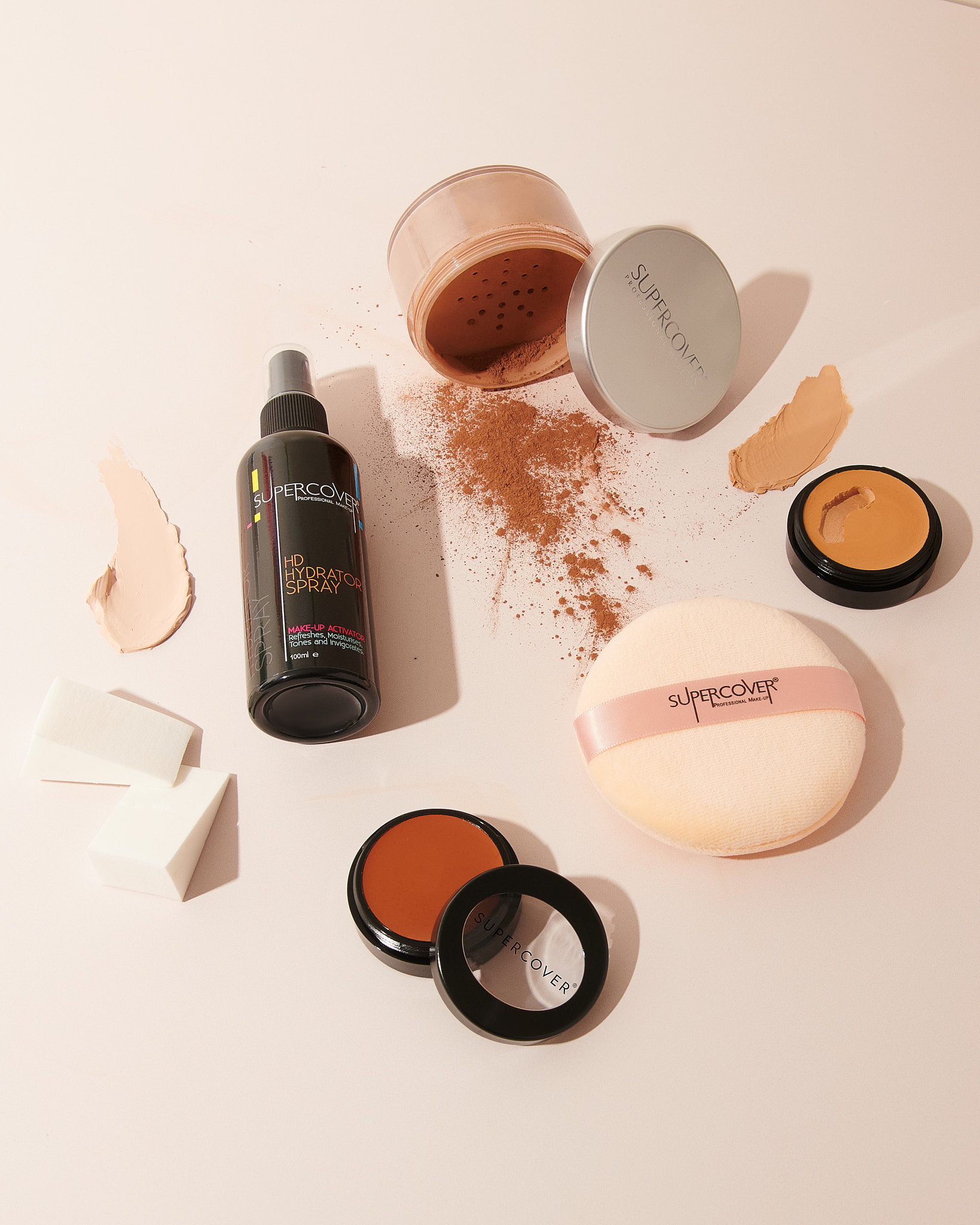
In the kitHydrator SprayPreps the skin and brings a set base back to a natural finish.ViewTest three shades in real light before the day
Trial Kit