
Heritage · 4 min read
Since 1997: how SUPERCOVER started
2 March 2026 · The SUPERCOVER Team
A salon in South London, two years of blending, and a foundation built around undertone rather than a light to dark ladder. The story behind the formula.
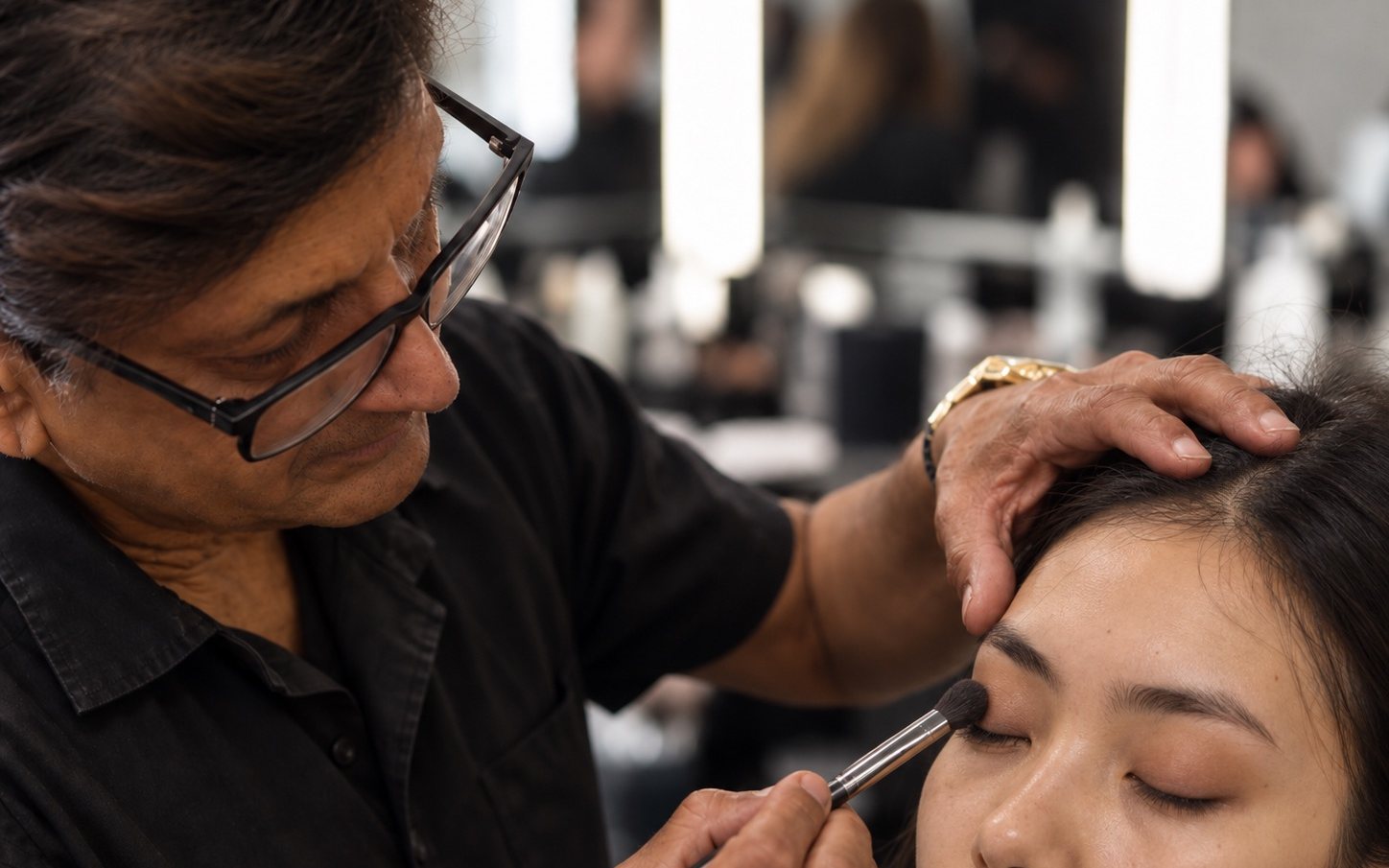
SUPERCOVER did not start in a laboratory or a boardroom. It started in a salon chair in South London in 1995, when Najma Ansari opened her first beauty salon and her husband Zaf, a working makeup artist, began spending his days beside her. Between them they saw hundreds of faces a month, and a pattern that anyone working on real clients will recognise: the products on the market simply did not agree with a large share of the skin walking through the door.
South Asian, Black, Mediterranean and olive complexions were routinely offered shades that went ashy, pink or orange once they settled. Artists compensated in the only way they could, mixing two or three products on the back of the hand for every client, and hoping the result held until the end of the event. It worked, after a fashion, but it was slow, it was hard to repeat, and it put the burden of the missing shade on the artist rather than the product.
Two years of blending
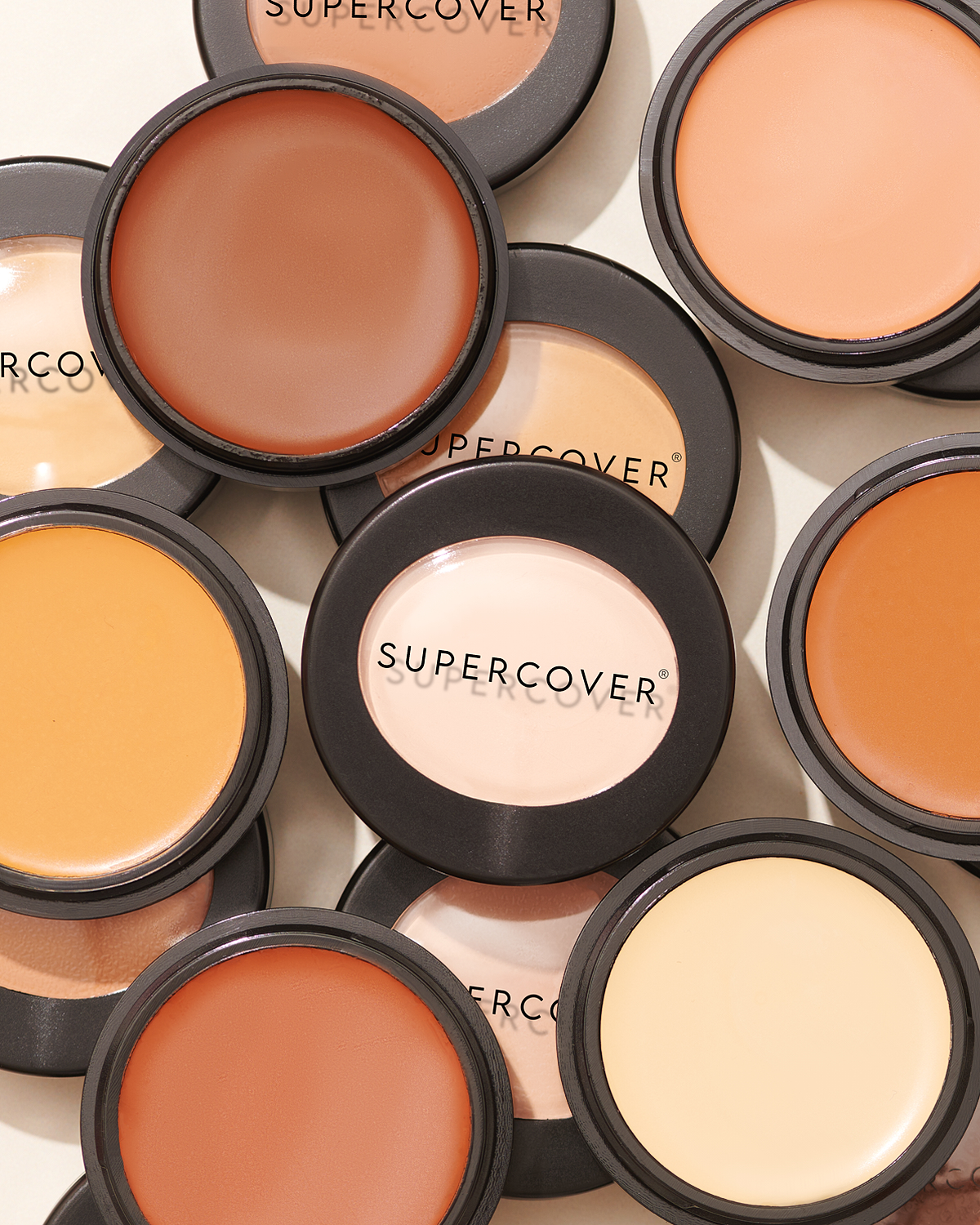
Zaf and Najma set out to fix the problem at its source. Rather than building a range from light to dark and adding a warm and a cool version at each step, they started from undertone. Which families of colour actually sit underneath skin, and what does a foundation need to carry so it disappears into each of them? The answer took two years of blending, testing on clients and going back to the palette.
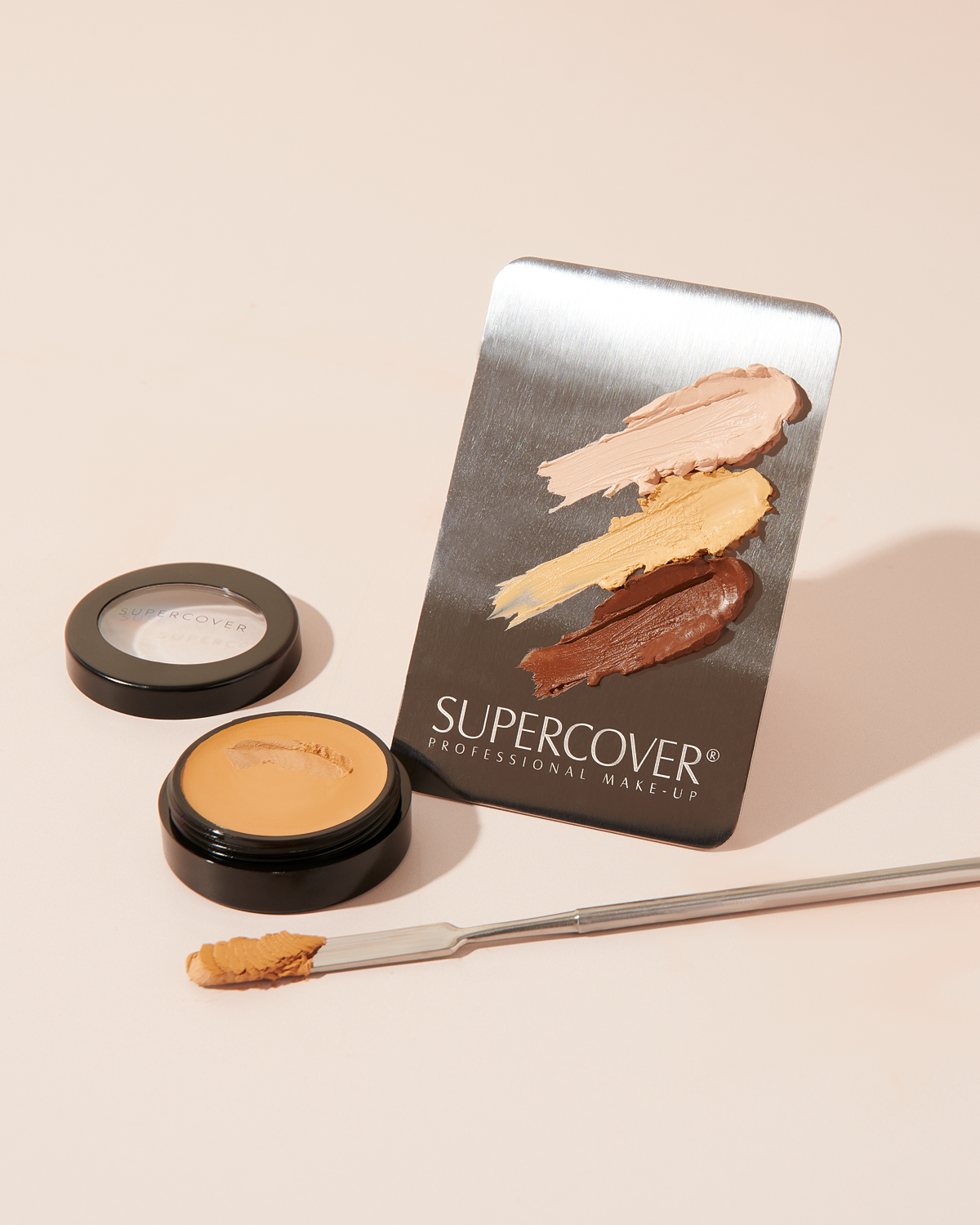
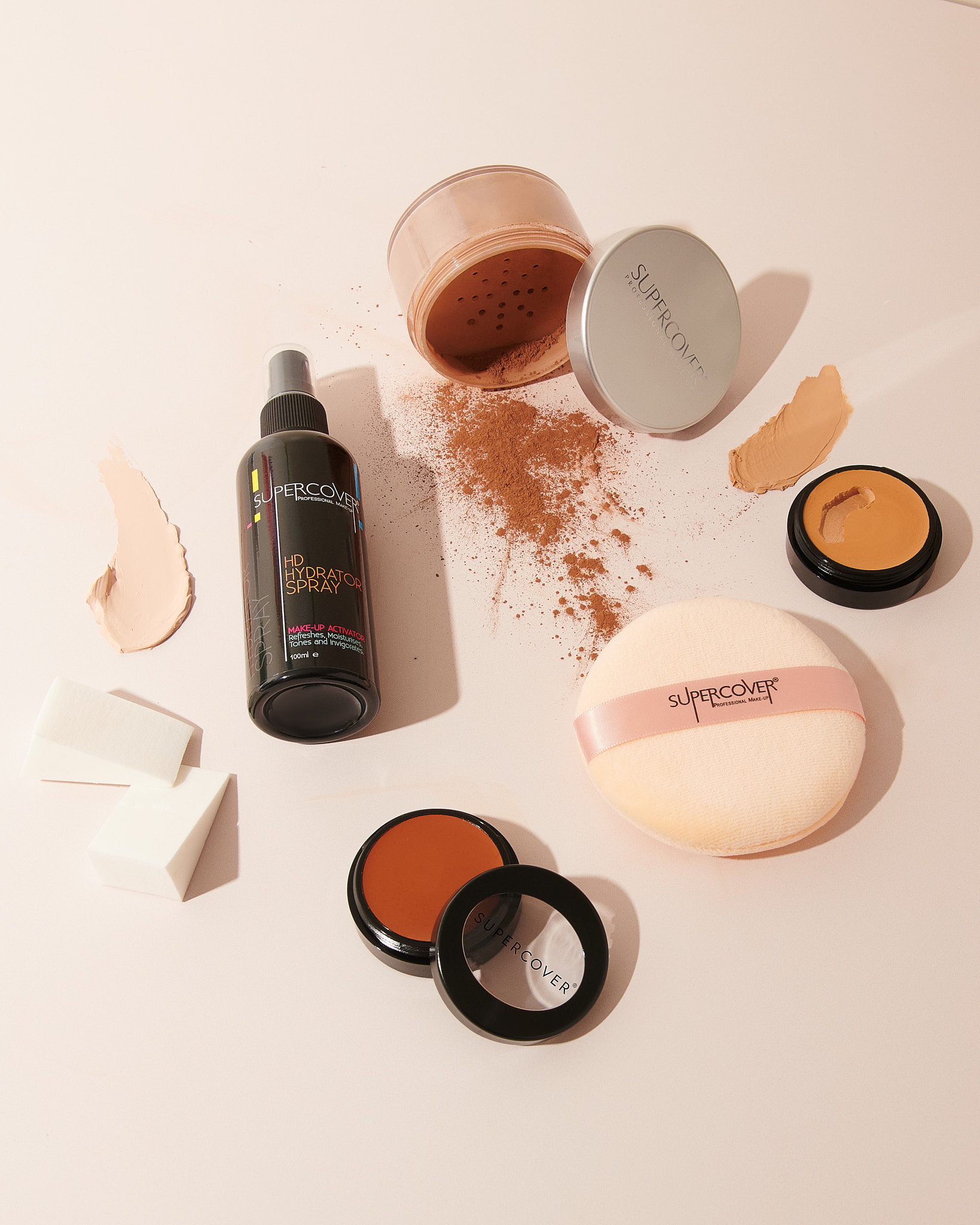
What came out of it was a concentrated cream foundation with minerals and botanicals, designed to be spread thin for a skin-like finish or built where more coverage was needed. Concentration mattered. A formula that relies on thickness for coverage looks heavy on camera and in person; one that relies on pigment can be pressed into the skin in a whisper-thin layer and still even out colour.
“We were never trying to cover people up. We were trying to find the colour that was already there, and let the makeup agree with it.”
— Zaf Ansari, co-founder
1997: a debut in front of the world
SUPERCOVER launched in 1997. That same year it was selected as the makeup for the finalists of Miss Asia International, a room full of different complexions, stage lighting and cameras, with no room for a base that shifted colour under the rig. For a brand only months old it was a demanding first public outing, and it set the tone for everything that followed: the product would be judged where the conditions were hardest.
Teaching the thinking, not just selling the pot
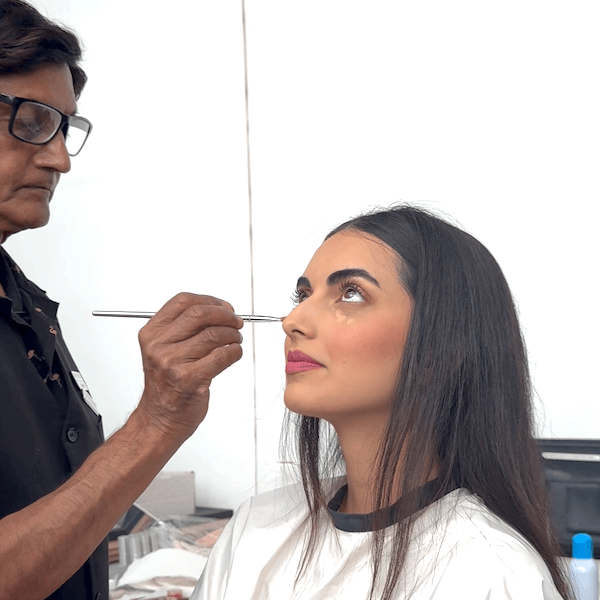
As the range found its way into more kits, Zaf spent increasing amounts of time teaching. Beauty colleges, trade shows and seminars across the UK became as much a part of the work as the salon. The lessons were rarely about a product. They were about reading skin: looking at the neck and behind the ear rather than the flushed centre of the face, understanding why a corrector used heavily on deeper skin turns grey, and why the best base is usually the thinnest one that does the job.
That emphasis on education shaped the range as much as the range shaped the teaching. The Corrector Wheel grew out of the same conviction. Instead of burying discolouration under layers of foundation, an artist could balance it locally with a formulated colour, then keep everything on top light. It remains one of the most requested items in the kit today.
Proved under studio light
Word spread among professional artists, and SUPERCOVER found its way onto sets. On BBC productions such as Casualty, the requirement was continuity: a base that reads the same on the first day of a block and the last, under studio lighting and across long shooting days. That kind of work is unglamorous and unforgiving, and it is where a professional formula earns its place in a kit or loses it.
The lessons from set fed straight back into how the products are used and taught. Press, do not drag. Build only where it is needed. Set with a fine powder so the cream holds and transfers less, and bring the surface back to skin at the end rather than leaving it flat. None of it is complicated. All of it is the difference between makeup that looks finished at the start of the day and makeup that still looks finished at the end.
From the kit to everyone
For most of its life SUPERCOVER has lived in professional kits. What has changed is who can reach it. The same formulas, the same undertone-led shade families and the same founding knowledge are now available to anyone who wants them, along with the tools artists have always relied on: a shade finder to shortlist, a trial kit to test in daylight, and guidance written by people who have matched skin for a living.
Nearly three decades on, the principle is unchanged. Start with undertone. Keep the base thin. Let the skin show through. It began in a salon chair in South London, and it still starts with the person in front of you.
Read the philosophy behind the formula
Skin Fusion